
In 2026, your website is often the first walk-through a potential client ever takes. Just like curb appeal can make or break a physical house sale, your modern real estate website design determines whether a visitor stays to browse or clicks away in seconds.
The bar has been raised. Buyers and sellers no longer just want a list of houses; they want an experience. They want speed, beauty, and intuitive navigation. If you’re looking to refresh your digital presence, you need more than just a pretty template. You need real estate website design ideas that are specifically engineered to turn random visitors into loyal clients.
In this massive guide, we are going to explore nine cutting-edge design strategies that are dominating the market this year. We’ll also discuss how these ideas tie into your overall real estate website development cost and how to ensure your beautiful new look still plays nice with search engines.
1. The “Search-First” Hero Section
If you look at the most successful tech companies in the world, Google, Airbnb, Zillow, they all have one thing in common: a massive, centered search bar.
When people visit a real estate site, they usually have one goal: to find a home. A core principle of modern real estate website design is removing all obstacles between the user and the search results. Instead of a cluttered menu or a giant photo of your team, make the search bar the “Hero” of the page.
Use a high-quality, atmospheric video or image of your local community as the background, but place a clean, bold search bar right in the middle. This design approach immediately gives the user what they want, reducing your bounce rate and increasing engagement from the very first second. If you’re wondering how to build a real estate website that generates leads, starting with a search-focused homepage is step number one.
2. Immersive “Lifestyle” Video Backgrounds
In 2026, static images are starting to feel a bit old school. One of the most effective real estate website design ideas involves using high-definition drone footage or lifestyle videos as your main background element.
Don’t just show the outside of a house. Show a family biking through a local park, a sunset over the downtown skyline, or a chef-style kitchen in action. This builds an emotional connection. You aren’t just selling bricks and mortar; you are selling a future.
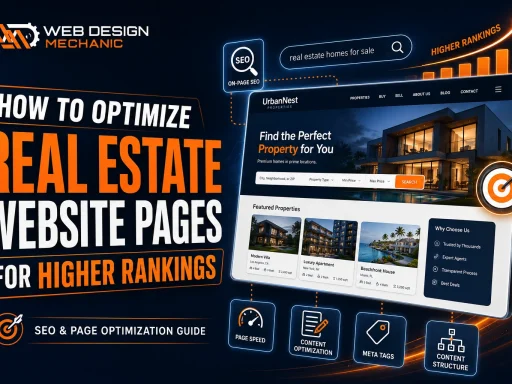
However, keep in mind that video can slow down your site. To make sure your site stays lightning-fast while using video, it’s vital to optimize real estate website pages for higher rankings by compressing your media files correctly.
3. Minimalist Property Cards with “Quick View”
When a user is scrolling through dozens of listings, analysis paralysis can set in. A hallmark of modern real estate website design is the use of minimalist property cards.
Instead of cramming 20 different stats onto the preview card, stick to the essentials:
- Price
- Beds/Baths
- Square Footage
- A “Quick View” button
The “Quick View” feature is a game-changer for conversions. It allows a user to see a pop-up with the top five photos and a short description without actually leaving the search results page. This keeps the browsing experience smooth and prevents the frustration of constantly clicking the “back” button.
4. Hyper-Local Dynamic Neighborhood Guides
If you want to beat the national portals like Zillow, you have to be the local expert. One of the best real estate website design ideas for 2026 is the creation of interactive neighborhood “Hubs.”
Design these pages to be more than just text. Include:
- Live market stats for that specific zip code.
- Interactive maps showing the best schools and coffee shops.
- A curated “vibe” gallery (photos of the local culture).
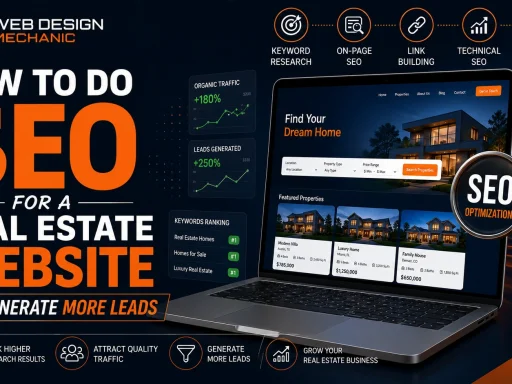
From an SEO perspective, this is pure gold. It’s a key part of how to do SEO for a real estate website to generate more leads. By designing these pages correctly, you tell Google that you are the ultimate authority on that specific patch of land.
5. AI-Powered “Vibe” Filters
Standard filters like “Price” and “Beds” are fine, but modern real estate website design is moving toward “intent-based” searching.
Imagine a search bar that allows users to filter by vibe or lifestyle.
- “Show me quiet, family-friendly streets.”
- “Find homes within walking distance of nightlife.”
- “Look for houses with lots of natural light for a home studio.”
Integrating AI into your search filters makes your site feel personalized. When a user feels like a website “understands” what they are looking for, they are much more likely to create an account and save their search. This is one of those 11 essential features every real estate website should have if you want to stay competitive this year.
6. Mobile-First “Thumb-Friendly” Navigation
Most real estate searches happen on a mobile phone while someone is sitting on their couch or out for a walk. If your site is just a shrunken-down version of a desktop site, your conversion rate will suffer.
A major trend in modern real estate website design is “Bottom-Bar Navigation.” Just like the Instagram or LinkedIn apps, put your most important buttons (Search, Favorites, Contact) at the bottom of the screen where the user’s thumb naturally rests.
If you are looking for custom website design services, make sure they prioritize mobile UI/UX. A site that is easy to use with one hand will always out-convert a “pretty” site that is clunky to navigate.
7. High-Contrast, Psychology-Based Lead Capture
Design isn’t just about looking good; it’s about guiding action. One of the most overlooked real estate website design ideas is the use of color psychology for lead capture forms.
Your “Schedule a Showing” or “What’s My Home Worth?” buttons should be the most high-contrast elements on the page. If your site is mostly blue and white, make your CTA (Call to Action) buttons a bright orange or coral.
Also, move away from the scary “Contact Us” label. Instead, use benefit-driven language like:
- “Get My Instant Valuation”
- “Take a Private 3D Tour”
- “Send Me Off-Market Listings”
This simple shift in design and copy can drastically improve your conversion rates. For help implementing these high-conversion patterns, check out the experts at Web Design Mechanic.
8. Dark Mode and High-Accessibility Toggle
In 2026, accessibility is no longer optional. A truly modern real estate website design includes a “Dark Mode” toggle and accessibility features for users with visual impairments.
Dark mode isn’t just a trend; it’s easier on the eyes during late-night house hunting sessions. By offering this, you provide a premium user experience that keeps people on your site longer. Additionally, ensuring your site meets ADA compliance standards protects your business and expands your reach to every possible client.
9. Integrated Social Proof and “Recently Sold” Data
Trust is the foundation of real estate. You can tell people you are great, but it’s much better if your website shows them.
One of the smartest real estate website design ideas is to integrate your “Sold” data directly onto your homepage and neighborhood pages. Use a map with “pins” showing all the homes you’ve closed in the last six months. Pair this with a scrolling carousel of video testimonials from those specific clients.
This visual proof of success is incredibly persuasive. It bridges the gap between “I’m looking at houses” and “I need to hire this specific agent.”
How to Combine Design with Performance
It is easy to get carried away with real estate website design ideas and forget about the technical side of things. A beautiful site that takes 10 seconds to load is a useless site.
When you are planning your modern real estate website design, you must keep “Core Web Vitals” in mind. Google ranks sites based on how fast they load and how stable the layout is.
Every custom animation, high-res video, and interactive map adds to your page weight. A professional designer knows how to balance these flashy features with lean code to ensure your site stays lightning-fast.
The Cost of Modern Design
Quality doesn’t come for free, but it is an investment that pays dividends. When evaluating your real estate website development cost, remember that you get what you pay for.
A cheap, $500 template might give you a basic presence, but it won’t include the AI filters, high-end mobile navigation, or deep IDX integration required for a truly modern real estate website design. Think of your website as a physical office. Would you rather have a tiny cubicle in a basement or a beautiful glass-front office on the busiest street in town? Your website is your digital “Main Street” location.
SEO and Design: A Winning Partnership
One common mistake is choosing design over SEO. However, in 2026, the two are inseparable. Google’s algorithms are now smart enough to recognize a “good” design. If users land on your site and immediately leave because the design is confusing, Google will lower your rankings.
This is why understanding SEO for a real estate website is crucial. A good design helps your SEO by:
- Increasing “Dwell Time” (how long people stay).
- Encouraging social sharing.
- Providing a logical site structure for Google to crawl.
Wrapping Up
Your website is the heart of your brand. By implementing these nine real estate website design ideas, you aren’t just making your site look better; you are making it work harder.
From the search-first hero section to AI-powered vibe filters, modern real estate website design is all about the user. When you put the user’s needs first, the conversions will naturally follow.
If you’re ready to stop losing leads to outdated tech and want a site that truly represents your expertise, it’s time to take action. Whether you are building from scratch or looking for a refresh, focusing on these conversion-centric design patterns will set you apart from the competition.
Don’t settle for a site that just exists. Build a site that sells. For professional help bringing these real estate website design ideas to market, reach out to the team at Web Design Mechanic. They specialize in creating high-performance, beautiful digital homes for real estate professionals.
Summary Checklist for Your New Design:
- Search Bar: Is it the first thing people see?
- Video: Does it tell a story of the local lifestyle?
- Property Cards: Are they clean and easy to scan?
- Local Guides: Do you look like the neighborhood expert?
- Mobile UI: Can you navigate the site with one thumb?
- CTAs: Do they pop off the page with high contrast?
- Speed: Does the site load in under 2 seconds?
- Social Proof: Is your “Sold” data visible and impressive?
In the competitive world of real estate, your digital curb appeal matters. Use these ideas to build a site that captures attention, builds trust, and ultimately, generates more leads for your business. Happy designing!