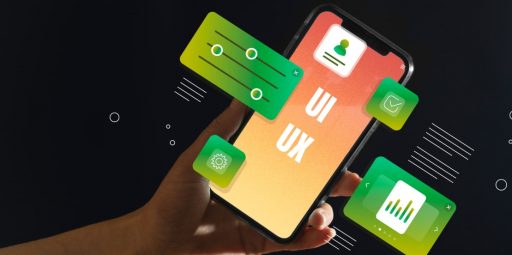
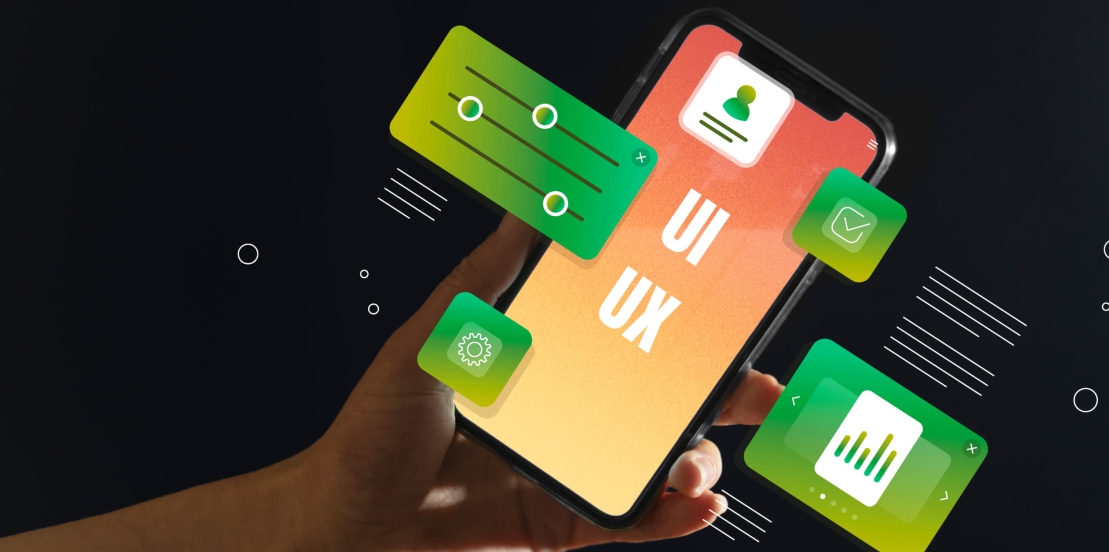

The year 2026 will be defined by one thing: Hyper-personalization powered by intelligence. We are moving away from static pages and toward living, breathing digital environments. If your current site feels like a brochure, it’s time to rethink your strategy.
1. Generative Interfaces Will Change Everything We Know About Layouts
For decades, we’ve designed websites with a one-size-fits-all mentality. You build a homepage, and every visitor sees the same thing. In 2026, that concept is going extinct. Generative UI uses AI to reorganize components, content, and layouts in real-time based on the specific user’s intent.
Imagine a user who visits your site looking for support. The Generative UI might prioritize a chat interface and documentation. If a different user visits to make a purchase, the layout shifts to highlight products and a quick checkout.
This level of fluidity is why many brands are looking to hire website designer teams who specialize in AI-integrated frameworks.
2. Immersive 3D Elements Are Moving from Novelty to Necessity.
We’ve seen 3D elements on the web for a few years, but they often felt like window dressing. They were heavy, slowed down page speeds, and were usually distracting. By 2026, browser capabilities and 5G speeds will make high-fidelity 3D seamless.
We are moving into “Spatial UI,” where users can rotate products, explore virtual spaces, and interact with depth without any lag. This is a game-changer for e-commerce and real estate. A professional web design agency now has to think in three dimensions rather than just flat grids.
3. Micro Interactions Are Becoming the Secret Sauce of User Engagement
If you want to know the difference between a “good” site and a “great” site, look at the micro interactions. These are the small, functional animations that happen when a user performs a task, like a button that subtly changes shape when clicked or a progress bar that has a personality.
In 2026, these interactions will be even more intuitive. They won’t just be for show; they will provide immediate, satisfying feedback that keeps users hooked.
- Haptic feedback integration: Mobile sites providing subtle vibrations for successful actions.
- Gesture-based navigation: Moving beyond simple taps to fluid swipes and pinches.
- State changes: Seamless transitions between light and dark modes or page sections.
Trend Feature |
2024 Status |
2026 Expectation |
| Personalization | Based on cookies/history | Real-time AI layout generation |
| 3D Elements | Static images or heavy files | Full spatial, interactive environments |
| Interactions | Standard clicks and hovers | Advanced, physics-based micro interactions |
| Accessibility | Checklist-based | Integrated, AI-driven adaptive design |
4. Emotional Design Creates a Deeper Bond with Your Visitors
In a world full of AI-generated content, human connection becomes a premium commodity. Emotional design is the practice of using color, typography, and human-centric imagery to evoke a specific feeling. In 2026, we will see a move away from the cold, corporate minimalism that dominated the 2010s.
Expect to see more:
- Micro-copy with personality: No more “Click Here.” Expect conversational prompts that sound like a friend.
- Soft, organic shapes: Moving away from harsh corners to create a sense of comfort and safety.
- Nostalgic aesthetics: Blending futuristic tech with “lo-fi” or “retro” visual cues to create a sense of familiarity.
5. Accessibility Is No Longer an Optional Feature for Modern Websites
If your site isn’t accessible, you are essentially closing your doors to 20% of the population. In 2026, accessibility (A11y) will move from a “compliance check” to a core design philosophy. The UI UX trends to watch in 2026 heavily favor inclusive design that works for everyone, regardless of their physical or cognitive abilities.
Smart agencies are now building sites that adapt to screen readers, voice commands, and high-contrast needs automatically. When you hire website designer professionals, the first question you should ask is how they handle inclusive design. It’s not just about ethics; it’s about reaching the widest possible audience.
6. Voice User Interfaces Are Evolving into Multimodal Experiences
We’ve been talking to Siri and Alexa for years, but 2026 will see the rise of the “Multimodal” web. This means users can interact with a site using a combination of voice, touch, and sight simultaneously.
Imagine browsing an online store. You scroll with your thumb while saying, “Show me these in blue,” and the interface updates instantly. A top-tier web design agency is already preparing for this by ensuring site architectures can handle complex, multi-input commands without breaking the user flow.
7. Sustainability Is Driving the Rise of Ethical Web Design
Did you know that the internet has a massive carbon footprint? As global awareness of climate change grows, “Sustainable Web Design” is becoming a major trend. In 2026, users will reward brands that prioritize “Green UX.”
How to make a website sustainable:
- Optimized assets: Smaller image sizes mean less energy used by servers.
- Dark mode by default: OLED screens use significantly less power when displaying dark colors.
- Efficient code: Reducing “bloat” to minimize processing power.
- Eco-friendly hosting: Partnering with data centers that run on renewable energy.
8. Data Storytelling Makes Complex Information Easy to Digest
We are living in the age of Big Data, but data is useless if people don’t understand it. In 2026, UI/UX will focus heavily on “Data Storytelling.” This means taking complex statistics and turning them into interactive, visual narratives.
Instead of a static chart, users will be able to “scrub” through timelines, click on data points for deeper context, and see how different variables affect the outcome. This is particularly vital for B2B companies and FinTech apps where clarity is king.
9. Minimalism Is Getting a Vibrant Makeover with Bold Aesthetics
The “Clean and White” look is being replaced by “Bento Grids” and vibrant, bold colors. While minimalism remains the foundation (we still want fast, uncluttered sites), 2026 will embrace high-contrast palettes and oversized typography.
The goal is to grab attention immediately. In a world of short attention spans, your site has three seconds to make a point. Bold typography and “Z-pattern” layouts help guide the eye to the most important information before the user has a chance to scroll away.
10. Artificial Intelligence Is Shifting from the Backend to the Frontend
Most people think of AI as something that happens behind the scenes, like an algorithm recommending a movie. In 2026, AI becomes a visible part of the UI. This includes things like:
- Context-aware menus: The sidebar changes based on what you are doing.
- AI-driven search: Instead of keyword matching, the search bar understands “I need a gift for my 10-year-old nephew who likes space.”
- Auto-summarization: Long blog posts or product descriptions that can be condensed into “Key Takeaways” with a single click.
To implement these features effectively, you need to hire expert website designer who understand API integrations and machine learning prompts.
11. Spatial Design Is Bridging the Gap Between Digital and Physical
With the release and refinement of devices like the Apple Vision Pro and Meta Quest, web design is no longer confined to a rectangular screen. “Spatial Design” is one of the most exciting UI UX trends to watch in 2026.
This involves designing for “pass-through” environments where the website lives in the user’s physical space. Imagine a cooking website where the recipe steps float in the air next to your stove, or a furniture store where you can “place” a virtual couch in your actual living room through your browser.
Comparison of User Experience Priorities (2025 vs 2026)
Priority Level |
2025 Focus |
2026 Focus |
| High | Mobile-First Design | AI-Adaptive Design |
| Medium | Dark Mode Options | Sustainable/Eco-Design |
| Medium | Standard Chatbots | Multimodal Voice/Touch |
| Emerging | Basic 3D Objects | Full Spatial UI |
Why You Need a Specialized Web Design Agency to Navigate These Changes
You might be looking at this list and feeling overwhelmed. How can a small or medium-sized business keep up with spatial design, AI-driven layouts, and sustainable code?
The truth is, you shouldn’t have to.
A specialized web design agency like Web Design Mechanic stays ahead of these trends so you don’t have to. We don’t just follow the trends; we test them. We figure out which ones actually drive conversions and which ones are just shiny objects.

When you work with a professional agency, you get:
- Strategic Foresight: We build your site today with the tech of tomorrow in mind.
- Technical Expertise: We know how to implement micro interactions that feel natural, not forced.
- Brand Longevity: We avoid fad designs that will look dated in six months.
How To Hire Website Designer Experts for the 2026 Era
If you are ready to update your digital presence, you shouldn’t just hire the first person who knows how to use WordPress. You need a team that understands the intersection of psychology, technology, and art.
Questions to ask before you hire:
- “How do you plan to integrate AI into my site’s user experience?”
- “Can you show me examples of how you handle complex micro interactions?”
- “What is your approach to sustainable and accessible design?”
- “Are you prepared to design for spatial and multimodal interfaces?”
If an agency can’t answer these questions, it is likely stuck in 2022. The 2026 landscape requires a different kind of thinker.
The Role of Micro Interactions in Building Brand Loyalty
We can’t stress this enough: the “little things” are what make people love a brand. Think about the “Pull to Refresh” gesture on your phone. It’s so satisfying that we do it without thinking.
In 2026, micro interactions will be used to create “Signature Moments.” Maybe it’s a unique way your cart icon “celebrates” when an item is added, or a subtle sound design that plays when a message is sent. These moments create an emotional payoff that brings users back.
Staying Ahead of the UI UX Trends to Watch In 2026
The most successful companies in the next two years won’t be the ones with the biggest budgets, but the ones with the most “agile” designs. Your website should be a modular system that can adapt to new trends as they emerge.
At Web Design Mechanic, we focus on building “future-proof” foundations. We use clean code, scalable architectures, and user-centric design principles that ensure your site remains a high-performing asset well into the late 2020s.
Summary Checklist for 2026 Success:
- Audit your site for accessibility compliance.
- Implement dark mode and energy-efficient design.
- Look for opportunities to add meaningful micro interactions.
- Plan for AI-driven personalization.
- Consider how your brand would look in a 3D or spatial environment.
Bottom Line
The UI UX trends to watch in 2026 all point toward one inescapable truth: The user is in control. Gone are the days of forcing users through a rigid, pre-defined path. The future of the web is fluid, intelligent, and deeply personal.
Whether it’s the way your site responds to a voice command or the subtle joy of a physics-based animation, every detail matters. If your website feels like it’s falling behind, it probably is. But the good news is that the tools available today are more powerful than ever before.
Don’t Let Your Business Get Left in The Past.
If you want to lead your industry in 2026, you need a partner who understands where the web is going. Contact Web Design Mechanic today to start building a digital experience that isn’t just modern, it’s ahead of its time.