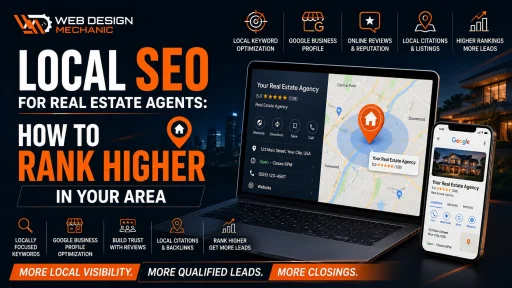
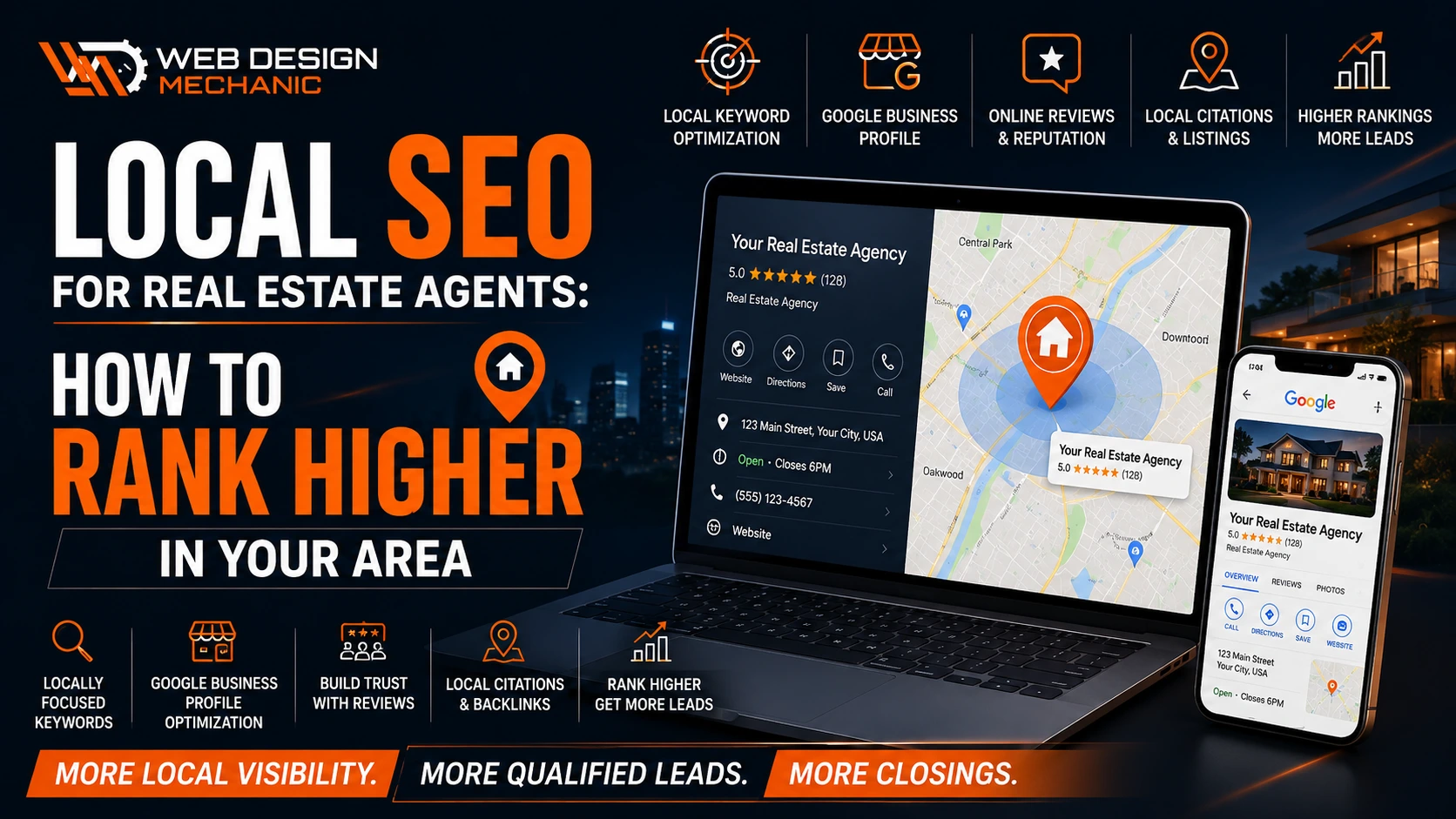

Have you ever wondered why that one agent in your town, the one who doesn’t even seem to work as hard as you, always ends up at the top of Google? You search for “realtor in [Your City]” and there they are, sitting pretty in that little box with the map. Meanwhile, your website, which you spent good money on, is buried on page four. The difference often isn’t luck or a bigger marketing budget; it comes down to Local SEO for Real Estate Agents and how effectively they’re positioning themselves online.
It feels a bit unfair, doesn’t it? But here is the secret: it’s not magic, and they aren’t paying Google under the table. They are simply winning the game of local SEO for real estate agents.
In the world of property sales, global doesn’t matter. You don’t need a buyer in London to find you if you’re selling suburban homes in Ohio. You need the people in your backyard to find you. That is where local search comes in. If you want to stop being a secret agent and start being the local authority, you need to understand how to rank real estate websites locally.
In this guide, we are going to walk through the exact steps to dominate your territory. We’ll talk about everything from your Google Business Profile to the importance of real estate local citations.
What is Local SEO and Why Should You Care?
Local SEO (Search Engine Optimization) is the process of optimizing your online presence to attract more business from relevant local searches. For real estate, this is the holy grail. Unlike a national portal like Zillow, which tries to cover every house in the country, you have the advantage of being hyper-local.
Google knows that when someone searches for “real estate agent,” they aren’t looking for a list of the best agents in the world; they want someone five miles away. When you master local SEO for real estate agents, you are essentially telling Google: “Hey, I am the expert in this specific zip code.”
The center of this universe is the “Map Pack”, the top three results that appear next to the Google Map. These three spots get the lion’s share of clicks. If you aren’t in there, you are missing out on the majority of the local traffic. If your current platform isn’t cutting it, you should learn how to build a real estate website that generates leads to ensure your digital foundation is strong enough to handle local competition.
Your Google Business Profile
If local SEO is a house, your Google Business Profile (GBP) is the foundation. It is the single most important tool in your arsenal. Without a fully optimized GBP, learning how to rank real estate website locally is almost impossible.
Here is how you make yours stand out:
- Claim and Verify: This sounds obvious, but many agents haven’t actually claimed their business. If you work for a brokerage, you can still have an individual practitioner listing.
- Categories: Don’t just pick “Real Estate Agent.” Add “Real Estate Agency” or “Real Estate Developer” if it applies. The more relevant categories you choose, the wider your net.
- Photos: Google loves photos. Upload professional shots of your latest listings, your office, and even your team. People want to see the face behind the name.
- Business Description: Use your keywords here naturally. Mention your city and the specific neighborhoods you serve. Don’t just say you sell houses; say you are the expert in [Neighborhood Name].
- Google Posts: Post about your new listings, open houses, or local market trends. It shows Google (and clients) that you are active and engaged with the community.
The Power of Real Estate Local Citations
A citation is simply any place on the internet where your business name, address, and phone number (NAP) are mentioned together. Think of real estate local citations as digital votes for your business. The more consistent citations you have, the more Google trusts that you are a real entity.
The golden rule here is NAP Consistency. If your address is “123 Main Street” on Google but “123 Main St.” on Yelp, Google gets a little bit confused. Consistency is key. It might seem like a small detail, but in the world of local SEO for real estate agents, details are everything.
Where should you get these real estate local citations?
- General Directories: Yelp, Yellow Pages, and Bing Places are the big ones.
- Industry Directories: Zillow, Realtor.com, and Homes.com are essentially the “authority” citations for our industry.
- Local Directories: Your local Chamber of Commerce, neighborhood blogs, and city-specific business directories.
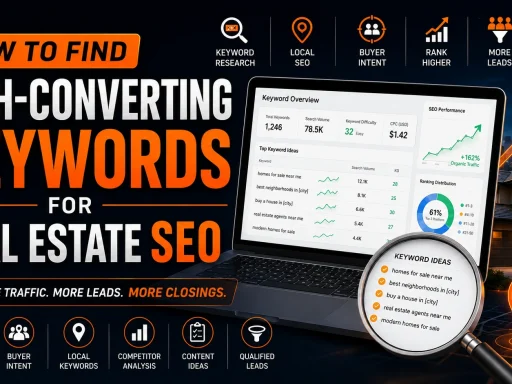
Building a solid list of real estate local citations tells search engines that your business is a legitimate part of the local community. To make sure these citations link back to a high-converting page, you should research How to Find High-Converting Keywords for Real Estate SEO to use in your directory descriptions.
On-Page SEO
Your website needs to be more than just pretty. It needs to be a local search engine. To rank, every page on your site should have a local flavor. This doesn’t mean keyword stuffing (repeating your city name 50 times); it means creating content that actually matters to local people.
City-Specific Landing Pages: Instead of one page for “Our Services,” create pages for “Selling Your Home in [City Name]” or “Buying a Condo in [Neighborhood Name].” This helps Google categorize your site for specific local queries.
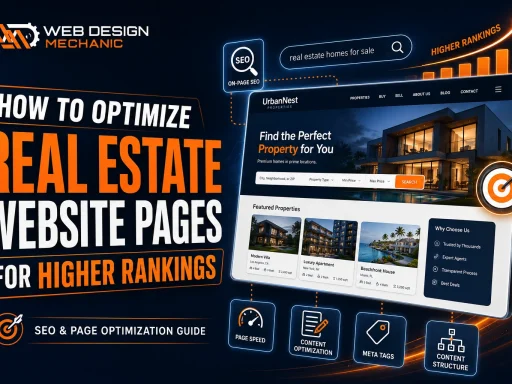
Local Content: Write about local schools, parks, and tax laws. If you want to dive into the technical side of making these pages rank, read our guide on How to Optimize Real Estate Website Pages for Higher Rankings.
Embed a Map: On your contact page, don’t just list your address; embed a Google Map. This provides a clear signal to search engines about your physical location.
Optimizing your on-page elements is a core part of how to rank real estate website locally. It tells the search bot exactly which neighborhood you specialize in.
Content Strategy
One of the best ways to win at local SEO for real estate agents is to stop acting like a salesperson and start acting like a local journalist. If you only write about mortgage rates and escrow, you’re competing with every national bank and big-box brokerage. But if you write about the “Top 5 Coffee Shops in [Neighborhood]” or “A History of the Historic District,” you are providing value that only a local can provide.
This type of content builds “Topical Authority.” When Google sees that you are the primary source of information for a specific town, it naturally wants to show your listings to people searching for homes in that town. It’s a subtle but powerful way to master how to rank real estate website locally.
The Reputation Game
In the local world, reviews are everything. They are one of the top-ranking factors for the Map Pack. A business with fifty 5-star reviews will almost always outrank a business with zero reviews, even if the latter has a better website.
But it’s not just about the number of reviews. Google looks at “Review Velocity”, how often are you getting new reviews? It also looks at the keywords used in those reviews. When a client says, “They are the best real estate agent in [City],” it acts as a massive boost for your local SEO for real estate agents efforts.
Don’t be afraid to ask for reviews! Make it part of your closing process. Send a link to your Google profile the day the keys are handed over. A strong reputation makes it much easier for Google to trust your site.
Mobile-First and Speed
Most local searches happen on the move. Someone is driving through a neighborhood, sees a house they like, and searches for the agent on their phone. If your site takes ten seconds to load or looks terrible on a smartphone, they will hit the back button immediately.
This “bounce” tells Google your site isn’t helpful, and your rankings will drop. Learning how to rank real estate website locally involves making the mobile experience flawless. This is where modern real estate website design ideas for better conversions come into play. You need a site that is fast, responsive, and easy to navigate with one thumb.
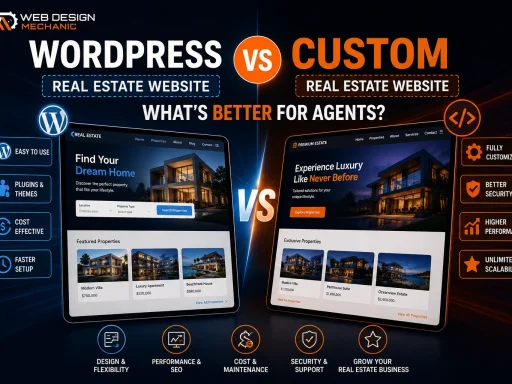
Technical performance is a cost of doing business today. If you’re curious about the investment needed for a high-performance site that stays ahead of these local trends, you can find more info here: How Much Does a Real Estate Website Cost in 2026.
Hyper-Local Backlinks
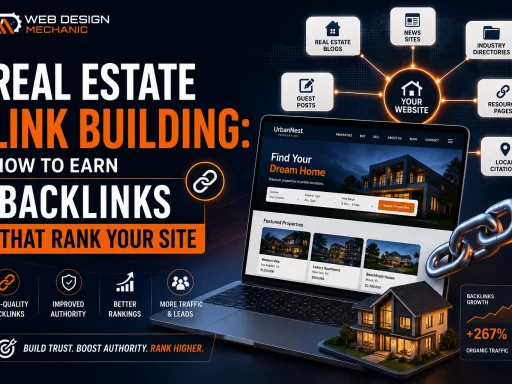
A backlink is when another website links to yours. For local SEO for real estate agents, you want links from other local businesses. These are much more valuable than a random link from a blog in another state.
- Sponsor a Local Team: Get a link from the local Little League or soccer club website.
- Partner with Local Pros: Link to a local plumber or home inspector, and ask them to link back to you as their preferred partner.
- Local Press: Did you do a charity event? Reach out to the local paper. A mention in a local news story with a link is SEO gold.
These links prove to Google that you are a connected, respected member of your specific local community, which is the ultimate goal when figuring out how to rank a real estate website locally.
Monitoring Your Progress
SEO is not a set it and forget it strategy. You need to know what’s working so you can double down on it.
- Google Search Console: This tells you which local keywords are bringing people to your site.
- Google Business Insights: This shows you how many people called you or asked for directions directly from your Map listing.
- Rank Tracking: Keep an eye on where you sit in the Map Pack for your primary city keywords.
Conclusion
The internet has made the real estate world feel massive, but at the end of the day, it is still a local business. You don’t need to beat the giant national portals at their own game; you just need to be the person people see when they search for homes in your town.
By mastering local SEO for real estate agents, you are taking control of your lead generation. You are no longer waiting for the phone to ring; you are positioning yourself in the exact spot where your clients are already looking. Focus on your Google Business Profile, clean up your real estate local citations, and create content that celebrates your community.
If you’re ready to stop guessing and start ranking, we are here to help. Whether you need a full real estate website design or just some guidance on your local strategy, feel free to reach out to us at Web Design Mechanic. Let’s get your business on the map, literally.
Contact us today, and let’s build a local search strategy that actually works for your specific area. Learning how to rank real estate website locally is the best investment you can make in the long-term health of your business. Now, go out there and claim your territory!