
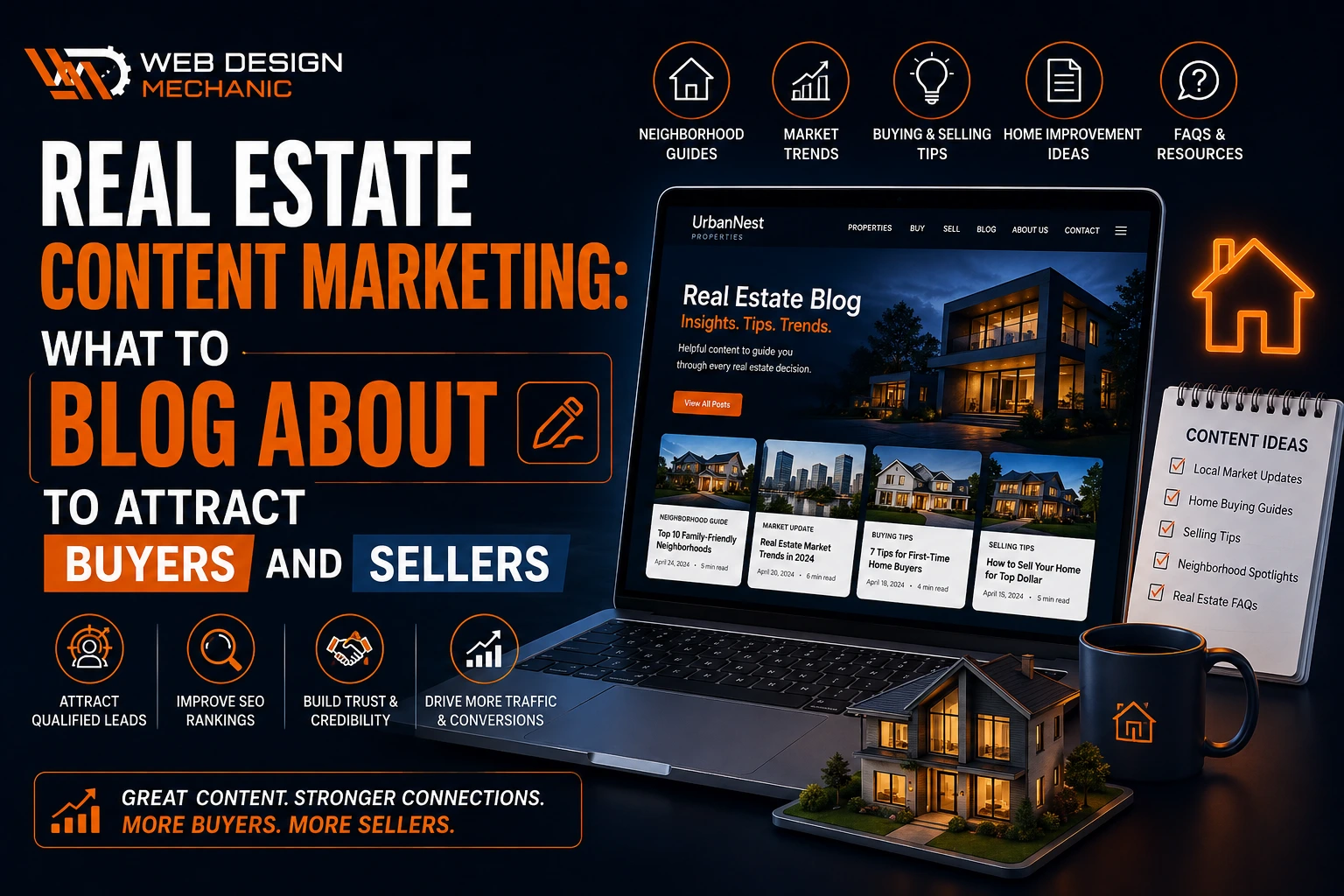

If you have been searching for real estate blog ideas that actually bring in qualified leads, you are not alone. Every real estate professional eventually faces the same challenge. You know you need to publish content, but you have no idea what to write about or how to make it work.
The truth is that blogging is one of the most powerful tools for building trust, generating organic traffic, and positioning yourself as the go-to expert in your market. But only when it is done strategically. In this guide, we break down exactly what to blog about, how to structure your content, and how to align your blog with a larger digital marketing strategy that converts.
What This Real Estate Marketing Guide Covers
This blog walks you through everything you need to build a high-performing real estate content strategy. Here is a quick look at what you will find inside:
- Proven real estate blog ideas for attracting buyers and sellers
- How content marketing for real estate agents builds authority and trust
- The best real estate blog topics organized by audience type
- How blogging for real estate SEO improves your search visibility
- Actionable tips for turning blog content into lead-generation tools
- Common FAQs about real estate blogging answered
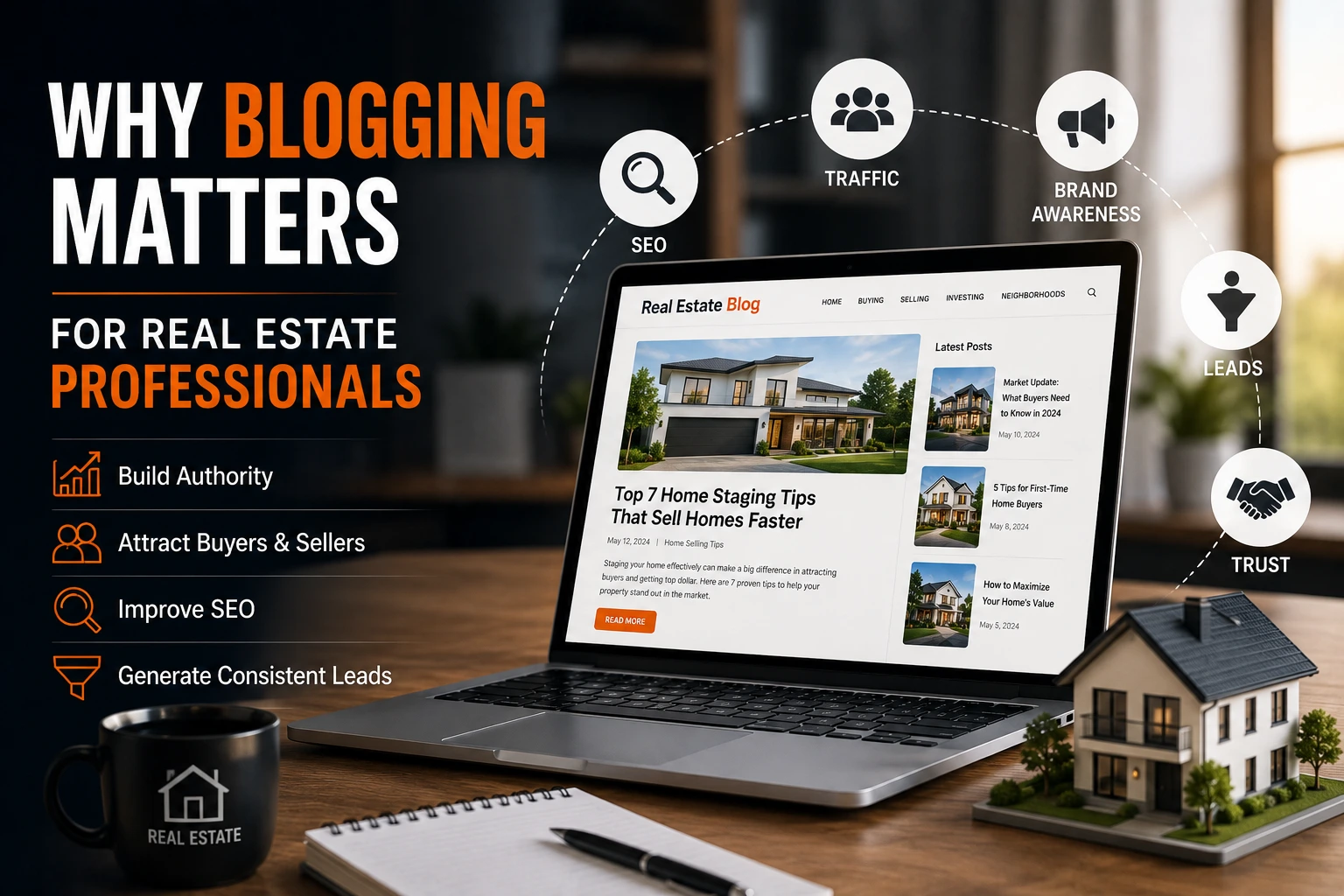
Why Blogging Matters for Real Estate Professionals
Real estate is a relationship-driven industry. Before a buyer or seller ever picks up the phone, they are searching online. They are reading neighborhood guides, comparing market trends, and looking for answers to very specific questions.
This is where content marketing for real estate agents becomes a game-changer. A well-maintained blog gives you the ability to show up in search results exactly when potential clients are looking for help. It builds familiarity, demonstrates expertise, and creates a digital footprint that works around the clock.
We have seen firsthand how real estate professionals who invest in consistent, strategic blogging experience measurable growth in organic traffic, lead quality, and brand authority. It is not about publishing for the sake of it. It is about publishing content that answers real questions and drives real action.
Key Benefits of Real Estate Blogging
- Increases organic visibility on Google
- Builds trust before the first conversation
- Positions you as a neighborhood and market expert
- Creates shareable content for social media
- Supports long-term lead generation without paid ads
Real Estate Blog Ideas That Attract Homebuyers
Buyers are not just searching for properties. They are searching for confidence. They want to feel informed, prepared, and guided. Your blog content should meet them at every stage of their journey.
Neighborhood Spotlights and Community Guides
One of the most effective real estate blog ideas is the hyper-local neighborhood guide. These posts highlight everything a potential buyer wants to know about a specific area.
- Local restaurants, parks, and entertainment options
- School district ratings and family-friendly amenities
- Commute times and public transportation access
- Upcoming infrastructure developments
A post like “Why Families Are Moving to Downtown Fremont” gives buyers a reason to explore a neighborhood they may not have considered. It also helps signal to Google that your website is a trusted and relevant local resource.
Homebuyer Education Content
Demystifying the buying process builds instant trust. Many first-time buyers feel overwhelmed, and your blog can be the calm, knowledgeable voice they need.
- What to know about mortgage pre-approvals before touring homes
- Step-by-step guides to making an offer
- Closing cost breakdowns and what to expect at settlement
- How to evaluate a home inspection report
These educational posts are excellent for blogging for real estate SEO because they target long-tail keywords that buyers are actively searching for.
Hidden Gems and Emerging Markets
Showcasing lesser-known neighborhoods or emerging markets positions you as someone with insider knowledge. Posts about upcoming commercial developments, new transit lines, or trending micro-markets give buyers valuable information they cannot easily find elsewhere.
Optimizing your real estate website pages for these topics ensures your content ranks well and reaches the right audience.
Real Estate Blog Topics That Convert Sellers
Sellers have different motivations and concerns. They want to know how much their home is worth, how to maximize their return, and how to navigate the listing process without costly mistakes.
Market Snapshots and Data-Driven Insights
Publishing regular market updates is one of the most powerful real estate blog topics for attracting sellers. These posts demonstrate that you understand the numbers and can guide pricing decisions with confidence.
- Monthly or quarterly housing market overviews
- Year-over-year price comparisons for specific zip codes
- Inventory trends and days-on-market analysis
- Forecasting posts that predict where the market is heading
Content like this establishes authority and gives sellers a reason to trust your expertise before they ever schedule a listing consultation.
Staging and Curb Appeal Advice
Sellers love actionable, practical tips. Blog posts about staging, photography preparation, and curb appeal improvements perform well because they offer immediate value.
- Before and after staging transformations
- Budget-friendly upgrades that increase home value
- Seasonal preparation tips for listing photos
- How professional photography impacts the sale price
The Listing Process Explained
Many sellers, especially first-timers, do not fully understand what happens after they decide to sell. Walking them through the process step by step removes anxiety and builds confidence in your services.
- Common mistakes sellers make and how to avoid them
- How to prepare for open houses and showings
- Understanding offers, counteroffers, and negotiations
- Timeline expectations from listing to closing
How Content Marketing for Real Estate Agents Drives Growth
Content marketing for real estate agents is more than just writing blog posts. It is a strategic approach to attracting, engaging, and converting potential clients through valuable, relevant content.
We have worked with real estate professionals who transformed their online presence simply by committing to a consistent blogging strategy backed by solid website design and user experience.
The Content Marketing Ecosystem
A successful real estate content strategy connects multiple channels and touchpoints.
|
Content Element |
Purpose |
Example |
|
Blog Posts |
Organic traffic and SEO authority |
Neighborhood guides and market updates |
|
Landing Pages |
Lead capture and conversion |
Free home valuation tool pages |
|
Email Newsletters |
Nurture and retention |
Weekly market digest emails |
|
Social Media Posts |
Amplification and engagement |
Blog snippets shared on Instagram or Facebook |
|
Video Content |
Trust building and personality |
Virtual neighborhood tours |
When these elements work together, your content becomes a lead-generation engine that runs continuously. Each blog post feeds your email list, fuels your social channels, and strengthens your website authority.
Aligning Content with Business Goals
While considering real estate blog ideas, know that every piece of content should have a clear objective. Before creating a blog post, take a moment to ask yourself the following questions:
- Who is this post for? Buyer, seller, or investor?
- What question does it answer?
- What action do I want the reader to take?
- How does this support my overall business objectives?
This strategic lens is what separates effective content marketing for real estate agents from random publishing.
Blogging for Real Estate SEO and How to Get It Right
Creating high-quality content is only one part of the process. Without proper search engine optimization, your blog posts may struggle to reach the audience they are intended to attract.
Blogging for real estate SEO requires a thoughtful approach to keyword research, on-page optimization, and technical performance.
Keyword Research and Topic Selection
Selecting the right real estate blog topics begins with understanding the questions and information your audience is actively searching for. Keyword research tools can help uncover high-intent searches related to home buying, selling, neighborhood insights, and local market trends.
Finding high-converting keywords for real estate is essential for creating content that ranks and converts. Focus on long-tail keywords that reflect specific questions and concerns.
On-Page SEO Best Practices
- Use your target keyword naturally in the title, first paragraph, and subheadings.
- Write compelling meta titles and descriptions.
- Use internal linking to connect related content.
- Optimize images with descriptive alt text.
- Keep paragraphs short and scannable.
Technical Performance Matters
Your blog content is only as effective as the website it lives on. A slow, poorly designed website will undermine even the best content strategy. That is why investing in professional WordPress website development is critical for real estate professionals who are serious about blogging for real estate SEO.
Fast load times, mobile responsiveness, and clean site architecture all contribute to better search rankings and improved user experience.
Turning Blog Content into Lead-Generation Assets
The ultimate goal of your blog is not just traffic. It is a conversion. Every post should guide the reader toward a meaningful next step.
Calls to Action That Work
- Invite readers to schedule a free consultation
- Offer downloadable resources like buyer checklists or seller guides
- Promote your listings within relevant blog posts
- Encourage email newsletter sign-ups for market updates
Repurposing Blog Content
One blog post can become multiple pieces of content across different platforms.
- Turn a neighborhood guide into a short video tour
- Extract key statistics for social media graphics
- Use blog topics as email newsletter themes
- Create carousel posts for Instagram from listicle-style blogs
Building a Content Calendar
Consistency is what separates real estate professionals who see results from those who give up after a few posts. Plan your real estate blog topics at least one month in advance and batch your writing when possible.
A content calendar helps you maintain variety, cover different audience segments, and align your publishing schedule with seasonal market trends.
Building a Website That Supports Your Content Strategy
Your blog is not a standalone asset. It works as part of a broader digital ecosystem that includes your website design, user experience, and overall conversion strategy.
A real estate website built for content marketing should include features like intuitive navigation, fast loading speeds, IDX integration, and a clean design that keeps visitors engaged.
Professional eCommerce website development principles apply here as well. Just like an online store needs to guide shoppers toward checkout, your real estate website needs to guide visitors toward contacting you.
We have helped businesses across multiple industries build websites that serve as the foundation for successful content strategies. The same principles apply to real estate. Great content deserves a great platform.
Frequently Asked Questions
Your Next Blog Post Could Be the One That Brings Your Best Client
Real estate blog ideas are everywhere once you start thinking like your audience. Every question a buyer asks at an open house, every concern a seller raises during a listing consultation, and every local event worth highlighting is a potential blog post waiting to be written.
The key is to approach your content with strategy, consistency, and a website built to convert. If you are ready to build a digital presence that turns your real estate blog into a lead-generation machine, Web Design Mechanic can help you create the foundation that makes it all work.