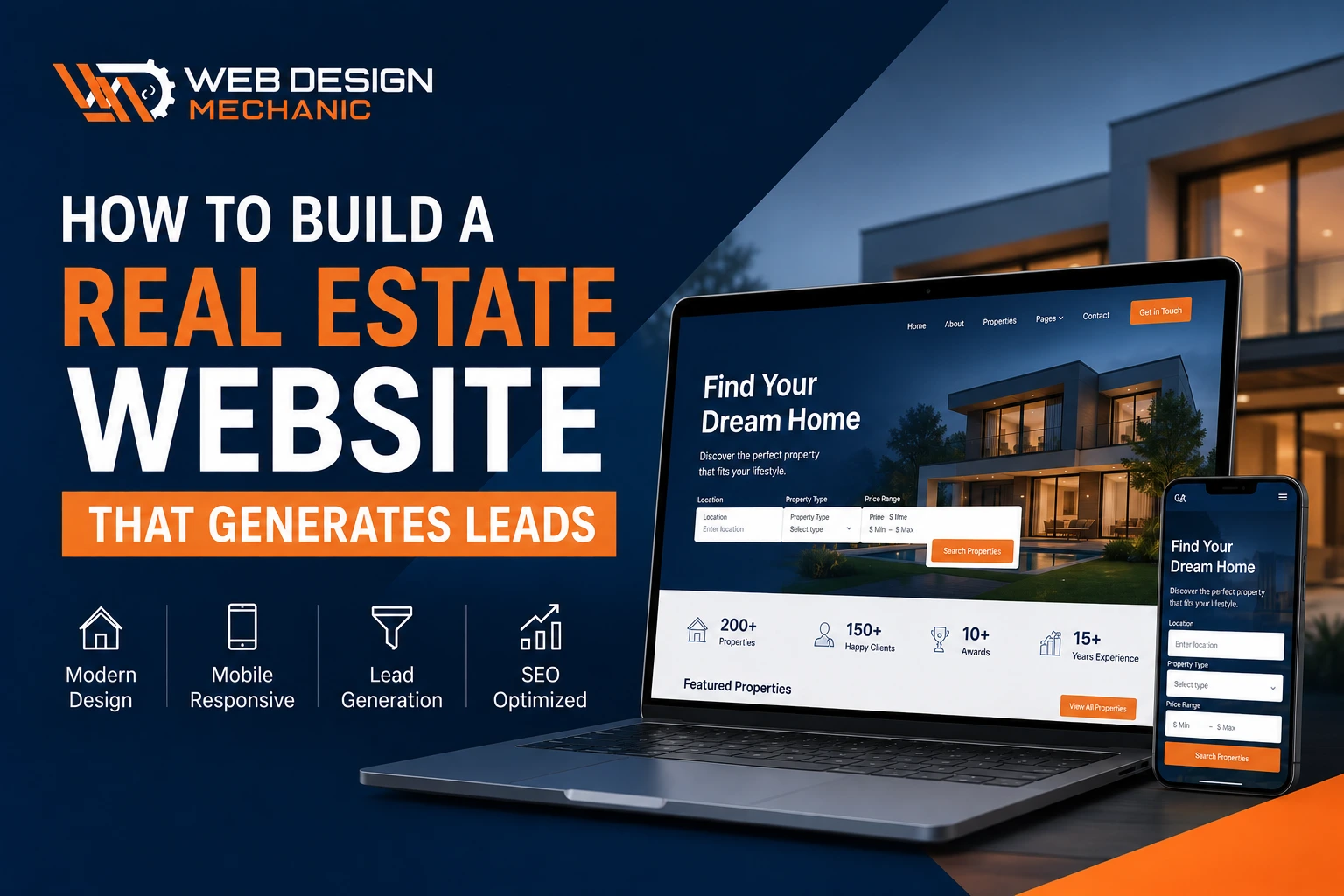

In the high-stakes world of real estate, your website is your most valuable employee. It doesn’t take sick days, it doesn’t sleep, and it’s often the very first point of contact a potential client has with your brand. But let’s be honest: most real estate websites are essentially digital paperweights. They look okay, they have a few listings, and they get absolutely zero traffic.
If you are reading this, you aren’t looking for a digital paperweight. You want a lead-generation machine. You want to know how to build a real estate website that actually fills your inbox with inquiries from serious buyers and sellers.
In this massive guide, we are going to dive deep into every single aspect of creating a high-performance real estate platform. From the psychology of design to the nitty-gritty of local SEO, we’ve got you covered.
Why Most Real Estate Websites Fail to Generate Leads
The real estate industry is crowded. Every agent in your zip code probably has a website. Yet, 90% of them fail to generate a single lead per month. Why is that?
The Gap Between Having a Website and Getting Leads
The primary reason is the brochure mentality. Most agents think that learning how to make a real estate website is just about putting their headshot and phone number online. They treat the website like a static flyer.
In reality, a website is a living, breathing ecosystem. The gap between a site and a lead is “Engagement.” If a visitor lands on your site and doesn’t find something immediately useful, whether that’s an easy-to-use search tool, a helpful neighborhood guide, or a clear call to action, they will leave. You have roughly 3 to 5 seconds to convince a visitor to stay. Most sites fail this test because they are too slow, too cluttered, or too focused on the agent rather than the client.
What Makes a Real Estate Website “Lead-Focused”?
A lead-focused website service is built with the end goal in mind. Every design choice is made to reduce friction. Friction is anything that makes it harder for a user to get what they want. If a user wants to know what their home is worth, they shouldn’t have to click through five different menus to find the valuation tool.
When you master how to design real estate website layouts that prioritize the user’s needs over your own aesthetic preferences, you start seeing results. Lead generation is about providing so much value that the visitor feels compelled to give you their contact information in exchange for more help.
Understanding the Goal: What a Lead-Generating Real Estate Website Should Achieve
Before you write a single line of code, you need to define your “North Star.” What is the ultimate purpose of this site?
Website vs. Lead Generation Machine
A website tells people you exist. A lead generation machine convinces people to work with you. A lead generation machine is proactive. It uses “Lead Magnets” (like free eBooks or market reports) to pull people into your sales funnel.
When you are learning how to create a real estate website, you need to think about the “Customer Acquisition Cost” (CAC). If you spend $5,000 on a website and it brings in a $20,000 commission in the first six months, that’s a massive win. If you spend $500 on a site and it brings in zero dollars, that’s a total loss.
The Buyer Journey in Real Estate
You need to cater to people at every stage of the journey:
- Awareness: They are just starting to think about moving. They need top-of-funnel content like “Is now a good time to sell in [City]?”
- Consideration: They are looking at specific neighborhoods. They need neighborhood guides and school data.
- Inquiry: They are ready to see houses. They need a seamless booking system and high-quality listing photos.
Key Success Metrics
How do you know if you’ve figured out how to build a real estate website correctly? Look at these numbers:
- Conversion Rate: The percentage of visitors who become leads. A good real estate site should aim for 2% to 5%.
- Bounce Rate: If this is over 70%, your site is either too slow or your content isn’t relevant.
- Cost Per Lead (CPL): If you are running ads, how much does it cost to get one person’s phone number?
Planning Your Real Estate Website Strategy
Strategy is the blueprint of your digital house. Without it, you’ll end up with a messy, confusing site.
Defining Your Target Audience
You cannot be the everything agent. If you try to appeal to first-time buyers, luxury sellers, commercial investors, and renters all at once, you will appeal to nobody. Your website’s tone, imagery, and content should be laser-focused on your primary client.
For example, if you focus on luxury real estate, your guide on how to design a real estate website should emphasize high-end videography, minimalist aesthetics, and exclusive community insights. If you focus on first-time buyers, you need mortgage calculators, step-by-step buying guides, and approachable language.
Choosing Your Niche
The more specific you are, the easier it is to rank on Google. Instead of “Real Estate Agent in Florida,” try “Waterfront Condo Expert in Miami.” This niche approach makes the process of how to make a real estate website much more manageable because you only have to create content for a specific slice of the market.
Setting Business Goals
Ask yourself:
- How many leads do I need per month to hit my sales targets?
- Do I want more buyer leads or seller leads?
- Am I building a personal brand or a brokerage brand?
Essential Website Structure for Real Estate Websites
The structure of your site determines how easily both humans and search engines can navigate it. Think of your website’s structure as the floor plan of a home. If the hallway doesn’t lead to the living room, or if the bathroom is hidden behind a secret panel in the kitchen, people are going to get frustrated and leave. When you are learning how to build a real estate website, you have to prioritize a logical, intuitive flow.
A solid structure doesn’t just help users; it helps Google’s crawlers understand what your site is about. If your pages are organized neatly, Google can index your listings more effectively, which helps you rank higher in search results.
Let’s break down the essential rooms your website needs and how to arrange them for maximum lead generation.
Homepage Structure That Converts
Your homepage is your “Lobby.” It is the first impression, and it needs to be inviting, clear, and professional. It shouldn’t just be a wall of text; it should be a visual guide that tells the visitor exactly where to go next.
- The Hero Section: This is the “above the fold” area, the first thing people see without scrolling. A powerful headline like “Helping You Find Home in [City]” is a great start, but you should also include a sub-headline that explains your unique value. For example: “The most up-to-date listings and local expertise to help you navigate the [City] market with confidence.” This is a crucial step in how to design a real estate website that builds immediate authority.
- Quick Search: This is the most important element on the page. Most people visit your site because they want to look at houses. Put a prominent search bar right in the hero section. Use an autocomplete feature so that as they type a neighborhood or zip code, the site suggests locations. This makes the search process frictionless.
- Value Proposition: Why should they choose you over a national portal? Use three clear icons or boxes to explain your edge. Maybe it’s “Direct MLS Access,” “Local Neighborhood Guides,” or “Expert Negotiation.” This tells the user that you aren’t just a search engine; you are a service provider.
- Social Proof: Real estate is a trust-based business. A carousel of 5-star reviews from Google, Yelp, or Zillow serves as a digital pat on the back. If potential clients see that others have had a great experience with you, they are far more likely to leave their own contact information.
- Featured Neighborhoods: Instead of just showing random houses, show the vibe of the city. Include a section with 3-4 clickable boxes for the most popular neighborhoods. This helps with SEO and shows that you truly know the local area.
Property Listing Page Design
When people look for how to design real estate website listing pages, they often overcomplicate it by trying to pack too much data into a small space. The best listing pages are clean and breathable.
- The Grid vs. List View: Allow users to choose how they see listings. A “Grid View” is great for visual buyers who want to see big photos, while a “List View” is better for those who want to compare stats like square footage and price per foot quickly.
- Smart Sorting: Give users the ability to sort by “Newest,” “Price: Low to High,” and “Most Popular.”
- Property Cards: Each listing should be represented by a card that shows the price, address, beds, baths, and square footage. Don’t hide this info! The user should be able to get the gist of the house without clicking into the detail page.
- Save/Favorite Button: Include a small heart icon on every listing. This is a classic micro-conversion. Even if they aren’t ready to buy, saving a home gets them into your system.
Property Detail Page Optimization
This is where the lead is won or lost. If the listing page is the window shopping phase, the detail page is the walk-through. Every property detail page should be an immersive experience.
- High-Resolution Gallery: Real estate photography is everything. Use a full-width gallery that is easy to swipe through on mobile. If you have drone shots or 360-degree tours, make sure they are prominently labeled. This is a key part of how to make a real estate website that feels premium.
- Compelling Description: Don’t just copy and paste the dry MLS remarks. Write a lifestyle description. Instead of saying large backyard, say “a spacious, fenced-in backyard perfect for summer BBQs and weekend gardening.”
- Interactive Map & Street View: Buyers want to see what the neighbor’s house looks like and how close the nearest Starbucks is. Integrate Google Street View so they can walk the neighborhood virtually.
- The Sticky Contact Sidebar: As the user scrolls through the house photos and details, a contact form or a “Schedule a Tour” button should stay visible on the side of the screen (or at the bottom on mobile). This ensures that the moment they feel “This could be the one,” the way to contact you is right there.
- Mortgage Calculator: This is a small tool that keeps people on your page longer. It helps them visualize the financial reality of the home, making the purchase feel more real.
About Page That Builds Trust
People work with people they like and trust. In a world of faceless corporations, your About page is your chance to show your humanity.
- The Power of Video: If you really want to know how to create a real estate website that converts, you need to use video. A 60-second video of you talking about why you love your city can do more than 5,000 words of text ever could. It lets them hear your voice and see your smile.
- The Story, Not the Resume: Don’t just list your awards. Tell the story of how you got started. Mention your family, your pets, or your favorite local charity. This makes you relatable.
- Community Involvement: Show photos of you at local events. This proves you aren’t just an agent selling the city; you are a resident living in the city.
Contact Page with Conversion Focus
Most contact pages are boring and feel like a dead end. Yours should feel like the start of a conversation.
- Lead Segmentation: Add a “Reason for Contact” dropdown menu with options like “I’m looking to buy,” “I want to sell,” or “I’m just curious about my home’s value.” This helps you prioritize your follow-up.
- Multiple Ways to Connect: Some people want to email, some want to call, and some want to text. Provide your phone number, a contact form, and a link to your WhatsApp.
- The “Thank You” Redirect: Once they hit “Submit,” don’t just show a little text box that says “Thanks.” Redirect them to a custom “Thank You” page that offers them a free download (like a Buyer’s Guide) while they wait for your call. This keeps the engagement going.
Blog and Neighborhood Guide Hierarchy
When considering how to design a real estate website for SEO, you cannot forget the blog structure. Your blog shouldn’t just be a random list of posts. It should be categorized by “Buying Tips,” “Selling Tips,” and “Local Lifestyle.”
- Pillar Pages: Create one massive guide for each major neighborhood. This page should link to every listing in that neighborhood and every blog post you’ve written about it. This “Silo” structure tells Google that you are the ultimate authority on that specific geographical area.
- Internal Linking: Every blog post should link back to your contact page or a specific listing. Never let a user reach a “dead end” on your site. Always give them a “Next Step.”
Must-Have Features of a High-Converting Real Estate Website
In the modern era, basic isn’t enough. You need features that make the user’s life easier. When you are planning how to create a real estate website, you should consider these non-negotiables.
Advanced Property Search Filters
Users expect a Zillow-like experience. If your search filters are clunky, they will leave. You need filters for:
- Property type (Single-family, Condo, Land).
- Specific features (Pool, Garage, Fireplace).
- Year built.
- Days on market.
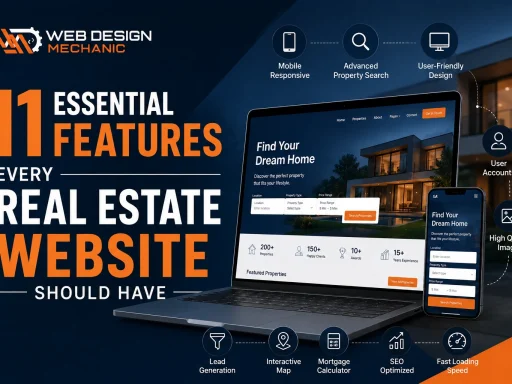
For a complete list of what you need, check out our guide on 11 Essential Features Every Real Estate Website Should Have.
Interactive Map Integration
Buying a home is about buying a location. An interactive map allows users to see exactly where a property is in relation to their workplace or their children’s school. Using the Google Maps API is the gold standard here.
CRM and Lead Management System
If you are learning how to make a real estate website, you must also learn about CRMs. Your website should automatically push every new lead into a system like Follow Up Boss or LionDesk. This allows for “Lead Routing,” where inquiries are instantly sent to the right agent on your team.
Inquiry and Booking Forms
Integration with a tool like Calendly allows potential buyers to book a private showing directly from the listing page. This removes the back-and-forth of scheduling and captures the lead when their interest is at its peak.
WhatsApp/Chat Integration
A “Live Chat” feature can increase conversions by up to 40%. Many users are hesitant to call but happy to text. A WhatsApp button makes you feel accessible and modern.
Real Estate Website Design Principles That Drive Conversions
Design is not just art; it’s science. When you are learning how to design a real estate website, you are studying human behavior.
Clean and Modern UI/UX Design
UI (User Interface) is how the site looks. UX (User Experience) is how it feels. A clean design uses plenty of white space to prevent the user from feeling overwhelmed. Use high-contrast buttons (like an orange “Search” button on a white background) to draw the eye toward the action you want the user to take.
Mobile-First Experience
More people will view your site on a phone than on a computer. This is a fact. If your mobile site is just a shrunken-down version of your desktop site, it will be hard to use. You need a “Responsive” design where elements stack and resize perfectly for thumb navigation.
Visual Hierarchy and Property Display Strategy
The most important information (Price, Beds/Baths, Location) should be the largest. Use a clear font that is easy to read. Avoid scripts or curly fonts that make the data hard to digest.
Trust-Building Elements
Real estate is built on trust. Use “Trust Signals”:
- Badges: NAR (National Association of Realtors) logos.
- Media Mentions: “As seen on Fox News” or local papers.
- Testimonials: Real photos of happy clients in front of their new homes.
Speed Optimization and Performance
Google loves fast sites. Users hate slow ones. Every second of load time can cost you thousands in lost commissions. Use a Content Delivery Network (CDN) to ensure your site loads fast for everyone, regardless of where they are.
SEO Strategy for Real Estate Websites
SEO, or Search Engine Optimization, is the engine that drives traffic to your digital doorstep. Without a solid SEO plan, your website is like a Ferrari parked in a garage with no doors; it’s a beautiful, high-performance machine, but nobody can see it, and it isn’t going anywhere.
Understanding how to build a real estate website with SEO in mind from day one is the secret to long-term, sustainable success. Unlike paid advertising, which stops the moment you stop paying, SEO builds equity in your brand over time.
Why SEO is Critical for Real Estate Leads
The magic of SEO lies in “User Intent.” Think about the difference between a Facebook ad and a Google search. When you run an ad on social media, you are essentially interrupting someone while they are looking at photos of their grandkids or watching a cooking video. You are hoping to catch their eye.
However, when someone goes to Google and types in “Best realtor in Austin” or “Homes for sale in Silver Lake,” they are actively looking for help. They have a problem, and they are searching for a solution. This is why SEO traffic is considered “high-intent.”
Because they sought you out, this traffic converts at a much higher rate than almost any other marketing channel. If you focus on how to make a real estate website that ranks for these specific queries, you are positioning yourself as the immediate answer to their prayers.
Keyword Research Strategy for Real Estate
The biggest mistake most people make when learning how to create a real estate website is trying to compete with the giants like Zillow or Realtor.com for broad terms. You will likely never rank #1 for the word “Real Estate.” It’s too broad, too competitive, and frankly, too expensive.
Instead, you need to find the balance between search volume and competition. This is where “Long-Tail Keywords” come into play.
- Broad Keyword: “Texas Homes” (Massive volume, impossible to rank for).
- Long-Tail Keyword: “[City] homes with a pool” or “Single-story ranch houses in [Neighborhood].”
These specific phrases have lower search volume, but the people searching for them are much closer to making a buying decision. If you are researching how to design real estate website content, your goal should be to own these hyper-local niches.
By targeting specific school districts, gated communities, or architectural styles (like “Mid-century modern homes in Palm Springs”), you can outrank the big portals because your content is more relevant to that specific search.
Content Strategy for Rankings
If SEO is the engine, content is the fuel that makes it run. You can’t just set up your site and leave it; Google rewards websites that are frequently updated with high-quality, original information. To maintain a competitive edge, you should be aiming to publish at least two high-value blog posts per week.
When you are figuring out how to design a real estate website content calendar, think about the questions your clients ask you every day. Those questions are exactly what they are typing into Google.
- “5 Neighborhoods in [City] to Watch in 2026”: This positions you as a forward-thinking expert. It attracts investors and buyers who want to get into an area before it peaks.
- “The Ultimate Checklist for Selling Your Home”: This is a “Lead Magnet.” Sellers are looking for a roadmap. By providing this checklist, you build trust before you even meet them for a listing presentation.
- “How Local Interest Rates Affect Your Buying Power”: Financial education is a huge gap in the market. If you can explain complex economic shifts in simple language, you become a trusted advisor.
The Role of Internal Linking
A massive part of SEO that people often overlook is how your pages talk to each other. For example, if you have a blog post detailing the “Top 5 Hidden Gem Coffee Shops in Downtown Seattle,” that page shouldn’t just be a dead end for the reader.
Instead, it should naturally include a link to your primary listing page for “Downtown Seattle Condos for Sale.” This tells Google that your content is deeply related and that you are an authority on the specific Seattle lifestyle, not just a random aggregator of data.
Similarly, when users are browsing, and they see information about the tech side of your site, they might wonder about the financial investment. The longer a user stays on your site, clicking from one helpful resource to another, the more “Authority” you gain in the eyes of search engines.
Technical SEO: Behind the Scenes
While content is king, technical SEO is the crown it sits on. When learning how to build a real estate website, you need to ensure the back end is clean.
- Site Speed: If your images are too heavy and the page takes 5 seconds to load, Google will penalize you.
- Mobile Optimization: Since most real estate searches happen on the go, your site must be flawless on a smartphone.
- Secure Connection (HTTPS): Google won’t rank sites that aren’t secure, especially since you are collecting personal lead data.
- Schema Markup: This is a special code that helps Google display your listings with extra details (like price and rating) directly in the search results.
By combining a smart keyword strategy with consistent, high-quality content and a fast, modern technical setup, you aren’t just building a site, you are building a lead-generating powerhouse.
How Local SEO Works for Real Estate Businesses
Real estate is a local game. You don’t need to rank in the whole country; you just need to dominate your specific town.
Importance of Local Search in Real Estate
When people search for “Real estate near me,” Google looks at your “Local SEO” signals. This is different from traditional SEO. It relies heavily on proximity and local relevance.
Google Business Profile Optimization
Your Google Business Profile (formerly Google My Business) is your second website.
- Post updates weekly.
- Upload photos of your latest closings.
- Reply to every single review, even the bad ones.
City-Based Landing Pages
If you serve three different cities, don’t just have one homepage. Create a landing page for each. For example: yourwebsite.com/luxury-homes-dallas and yourwebsite.com/luxury-homes-fort-worth. This tells Google you are an authority in both locations.
Keyword Strategy for Real Estate Websites
If your website is the engine, then keywords are the navigation system. They are the connectors that bridge the gap between a user’s wandering thoughts and your specific real estate services. Without a clear keyword strategy, you are essentially driving in the dark without a map. To understand how to build a real estate website that actually shows up when people need it, you must first understand the language your potential clients are using.
Keywords aren’t just about search volume; they are about understanding human behavior and intent. When you master the art of choosing the right words, you don’t just get more traffic, you get the right traffic.
Short-tail vs. Long-tail Keywords: Finding the “Sweet Spot”
In the SEO world, we generally categorize keywords into two groups: short-tail and long-tail.
- Short-tail Keywords: These are broad, one or two-word phrases like “Real estate agent” or “Homes for sale.” While they have massive search volumes (thousands of people search for these every day), the competition is fierce.
- You’re competing with multi-billion dollar companies like Zillow, Redfin, and Realtor.com. For a local agent or even a medium-sized brokerage, ranking for these is a nearly impossible uphill battle.
- Long-tail Keywords: These are longer, more specific phrases like “Realtor specializing in historical homes in Savannah, GA” or “3-bedroom condos for sale near downtown Denver with mountain views.” These keywords have lower search volume, but the competition is much lower. Most importantly, the conversion rate is much higher.
Think about it: someone searching for “real estate” might just be bored and looking at pretty pictures. But someone searching for a “realtor specializing in historical homes in Savannah” is likely ready to hire an expert in that exact niche. When you are learning how to design real estate website content, focusing on these long-tail “gold mines” is the fastest way to see a return on your effort.
Buyer Intent Keywords: Capturing the “Ready to Act” Lead
Not all searches are created equal. Some people are just “window shopping,” while others have their checkbooks ready. To figure out how to make a real estate website that generates money, you must target “Buyer Intent” keywords. These are phrases that include action words, which signal that a user is deep in the decision-making process.
Focus on keywords that include:
- “Buy”: e.g., “Best time to buy a home in [City].”
- “Sell”: e.g., “How to sell my house fast in [City].”
- “Listing”: e.g., “New luxury listings in [Neighborhood].”
- “Appraisal” or “Value”: e.g., “Free home appraisal [City]” or “What is my home worth?”
- “Agent” or “Broker”: e.g., “Top-rated buyer’s agent in [City].”
By centering your pages around these high-intent phrases, you ensure that the people landing on your site aren’t just casual browsers; they are potential clients looking for a professional to guide them through a transaction.
Keyword Clustering for SEO Growth: Building “Power Pages”
Gone are the days when you could just repeat the same keyword ten times on a page and rank #1. Google’s algorithms have become incredibly sophisticated; they now look for context and topic authority. This is where “Keyword Clustering” comes in.
Instead of targeting one lone keyword per page, you should target a “topic cluster.” For example, if you want to rank for “Moving to Nashville,” you shouldn’t just write a 300-word blurb with that title. Instead, you build a “Power Page” (also known as a Pillar Page) that covers everything related to that move:
- Nashville cost of living
- Best schools in Nashville
- Nashville job market for tech workers
- Top 5 Nashville neighborhoods for families
By grouping these related keywords together on one comprehensive page, you signal to Google that your website is the ultimate authority on “Moving to Nashville.” This is a sophisticated strategy for how to create a real estate website that outranks older, less organized competitors.
Content Mapping with Keywords
Once you have your clusters, you need to map them to the right parts of your site. This is a vital step in how to design a real estate website that flows logically.
- Informational Keywords (e.g., “How to save for a down payment”) belong on your blog.
- Transactional Keywords (e.g., “[City] homes for sale”) belong on your search and listing pages.
- Branded Keywords (e.g., “[Your Name] Real Estate reviews”) belong on your About and Testimonial pages.
Integrating the Strategy into Your Design
Your keyword strategy shouldn’t feel “bolted on.” It should be integrated into the very fabric of your site. Furthermore, your technical structure needs to support these keywords. Proper keyword research is an investment that pays for itself by reducing your reliance on expensive paid ads.
Finally, remember that keywords aren’t just for Google; they are for your users. If your site uses the same terminology your clients use, they will immediately feel like you get them. This builds the trust necessary to move them from a random visitor to a closed deal. F
On-Page SEO Optimization for Listings and Pages
Once you have your keywords, you need to put them in the right places. This is a vital part of how to make a real estate website that search engines can actually understand.
SEO-friendly Property Listings
Every listing should have a unique Title Tag. Don’t just use “Property 123.” Use “Modern 3-Bedroom Home for Sale in [Neighborhood], [City] | [Your Name].”
Optimizing Titles and Meta Descriptions
The Meta Description is the little blurb that shows up in Google results. It shouldn’t just be a list of facts; it should be an “ad” for your page. Make it catchy: “Looking for your dream home in [City]? Browse our exclusive 2026 listings, including off-market properties you won’t find on Zillow!”
Image SEO for Real Estate Properties
Google Images is a massive source of traffic. Give your photos descriptive “Alt Text.” Instead of house1.jpg, name the file modern-farmhouse-kitchen-austin-texas.jpg.
Schema Markup for Real Estate Listings
Schema is a hidden code that tells Google, “This page is a house for sale, it costs $500,000, and it has 4 bedrooms.” This can lead to “Rich Snippets,” where your listing information appears directly on the Google search results page.
Some Lead Generation Strategies for Real Estate Websites
Traffic is vanity; leads are sanity. Let’s talk about how to build a real estate website that converts.
Turning Traffic into Leads
The most effective way to capture a lead is the “Gated Content” strategy. You provide something valuable, but the user has to enter their email to see it.
- Example: “Enter your email to see the full list of homes under $400k in this neighborhood.”
CTA Placement Strategy
Don’t hide your contact forms. They should be at the top, middle, and bottom of every page. Use “Sticky CTAs” that follow the user as they scroll down the page.
Lead Magnets
A lead magnet is a “bribe” for an email address. Some of the best for real estate include:
- A “Relocation Guide” PDF.
- A “Home Staging Secrets” video series.
- A “Mortgage Pre-Approval” checklist.
Email Marketing & CRM Integration
Once you have the lead, you must nurture it. Most real estate leads don’t buy for 6 to 12 months. If you don’t stay in touch with automated email drips, they will forget about you. Your website is the “top” of the funnel; your CRM is the “middle.”
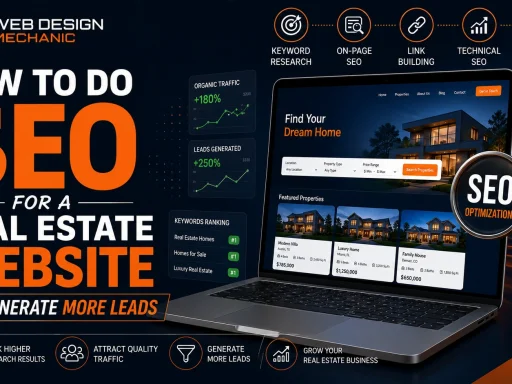
To get further insights for SEO read, How to Do SEO for a Real Estate Website to Generate More Leads.
Some Real Estate Website Design Ideas & Modern Trends
Real estate design moves fast. To stay ahead, you need to know how to design a real estate website for the future.
Minimalist vs. Luxury Design Styles
Minimalism is all about speed and efficiency. Luxury design is about emotion and status. If you are selling high-end estates, use “Cinematic” video backgrounds and “Serif” fonts that evoke a sense of tradition and quality.
Interactive Property Experiences
We are moving beyond static photos. Modern sites use “Interactive Floor Plans” where users can click on a room to see the photo from that angle. For more inspiration, explore our article on Modern Real Estate Website Design Ideas for Better Conversions.
Virtual Tours and 3D Listings
Matterport tours are becoming the industry standard. They allow a buyer from another state to walk through the home without getting on a plane. Integrating these tours into your property detail pages is a huge win for lead generation.
Real Estate Website Development Cost Breakdown
One of the most frequent questions we get is: “What’s the price tag?” When people ask how to create a real estate website, they are often surprised by the range.
Factors Affecting Development Cost
- Custom vs. Template:A template is cheaper but limited. A custom site is built for your specific workflow.
- Data Integration:Connecting to the MLS (via IDX or VOW) usually requires a monthly fee and technical setup.
- Content Creation:Hiring a professional writer and photographer can add thousands to the budget.
ROI of Investing in a Real Estate Website
Think about it this way: one average commission is roughly $10,000. If a high-quality website costs you $10,000 but brings in 5 extra deals a year, you’ve made a 500% return on your investment.
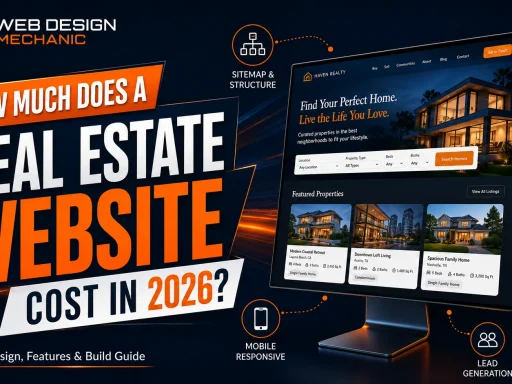
For a detailed breakdown of current pricing, see our guide: How Much Does a Real Estate Website Cost in 2026?.
Common Mistakes to Avoid in Real Estate Website Development
Building a digital presence is a bit like building a physical home; if you cut corners on the foundation, the whole thing will eventually lean, crack, and lose its value. When you are figuring out how to build a real estate website, it is easy to get distracted by flashy animations or trendy color palettes. However, many agents and developers fall into the same predictable traps that turn a potentially high-earning asset into a digital paperweight.
To ensure your investment pays off, let’s look at the most common pitfalls people face when learning how to make a real estate website and, more importantly, how you can avoid them.
Weak SEO Implementation: The “Afterthought” Error
One of the biggest blunders you can make is waiting until your site is finished before thinking about search engine optimization. Many people believe SEO is like a garnish you sprinkle on top of a meal once it’s cooked. In reality, SEO is the seasoning that needs to be baked into every layer of the cake.
If you don’t consider how to create a real estate website with a search-friendly architecture from day one, you’ll end up with a site that looks great but remains invisible to Google. This means your URL structures, your heading hierarchies (H1S, H2S), and your image alt-tags must be planned during the wireframing stage.
If you build a site and then try to “add SEO” later, you’ll often find yourself having to rewrite code, rename pages, and break existing links, a process that is both expensive and frustrating.
Lack of Lead Capture Systems: The “Library” Syndrome
If there is no clear way for a visitor to leave their information, your website isn’t a business tool; it’s just a library. You don’t want people to just “browse” your listings and leave; you want them to engage with you.
A common mistake in how to design a real estate website is failing to provide enough “capture points.” Every page should have a clear, enticing Call to Action (CTA). If a user is on a blog post about local schools, there should be a button to “Download the Full School District Report.” If they are looking at a $1M listing, there should be a “Schedule a Private Tour” button. Without these systems, you are letting thousands of dollars in potential commissions walk out the digital door every single month.
Slow Website Performance: The 2-Second Rule
In the age of instant gratification, patience is a dead virtue. If your website takes more than 2 seconds to load, your potential client is going to click the back button and head straight to Zillow or a competitor’s site.
When agents learn how to design real estate website layouts, they often want to use massive, uncompressed 4K photos of their listings. While high-quality imagery is vital, if those files aren’t optimized for the web, they will bloat your load times and tank your rankings.
Google’s “Core Web Vitals” are now a major ranking factor; if your site is slow, you won’t just lose the user, you’ll lose your spot on page one of the search results. Speed isn’t just a luxury; it’s a core requirement for conversion.
Ignoring Mobile Users: The “Desktop-Only” Blind Spot
It is a documented fact: more than 60% of real estate searches now happen on a mobile device. People are searching for homes while sitting in traffic, waiting for coffee, or lying in bed. If your site looks beautiful on a 27-inch iMac but is impossible to navigate on an iPhone, you are alienating more than half of your audience.
A common error in how to build a real estate website is failing to test the thumb-friendliness of the design. Buttons that are too small to click, forms that don’t scale properly, and menus that cover the entire screen are conversion killers. You must adopt a “Mobile-First” mentality. Before you approve any design, test it on both an iPhone and an Android. If it’s hard to use, fix it immediately.
Overcomplicating the Navigation
Don’t make your users go on a treasure hunt to find your contact info. Some agents get so creative with their menus that they forget basic usability. Your “Search,” “Sell,” and “Contact” buttons should be exactly where people expect them to be. If a user has to think too hard about how to get to the next page, they will simply leave.
Neglecting the “Trust” Factor
Finally, many websites fail because they feel anonymous. Real estate is a deeply personal transaction. If your site is full of stock photos of generic houses and people shaking hands, it won’t build trust. You need real photos of yourself, your team, and your actual local community.
People want to see that you are a real person who knows the local streets. If you ignore the “About” page or hide your testimonials in a dark corner of the site, you are missing a massive opportunity to connect. Building trust is an expensive part of the process, but it’s worth every penny.
Step-by-Step Process to Build a Real Estate Website
Now that we’ve covered the “what” and the “why,” let’s talk about the “how.” The journey of how to build a real estate website is a marathon, not a sprint. It requires a disciplined, phase-based approach to ensure that every technical and creative element is perfectly aligned with your lead-generation goals.
Whether you are wondering how to make a real estate website for the first time or you are looking to overhaul an existing platform, following a structured roadmap is the only way to avoid costly mistakes and technical debt.
Below is the definitive step-by-step process for how to create a real estate website that stands the test of time and outshines the competition.
Step 1: Planning and Research
Analyze your competitors. What keywords are they ranking for? What does their checkout/lead process look like?
Step 2: Design and Wireframing
Create a “Map” of your site. Decide where the search bar goes, where the blog goes, and where the “Sell” button goes. This is the blueprint stage of how to design a real estate website.
Step 3: Development Process
This is where the coding happens. You’ll set up your database, integrate your IDX feed, and ensure your site is secure (HTTPS).
Step 4: SEO Setup
Configure your “Permalinks,” set up your sitemap, and submit your site to Google Search Console.
Step 5: Launch and Optimization
Go live! But the work isn’t done. Use “Heatmaps” to see where people are clicking and keep tweaking your design for better results.
Tools and Platforms to Build a Real Estate Website
Choosing the right tech stack is essentially like choosing the foundation and framing for a custom-built home. You wouldn’t build a luxury mansion on a sand foundation, and you shouldn’t build your digital business on a platform that can’t handle the weight of your goals.
When you are learning how to build a real estate website, you will quickly find that the tool you choose dictates how much control you have over your SEO, your lead data, and your user experience. The modern market is flooded with “drag-and-drop” builders, but for a professional who wants to scale, you need a combination of flexibility and power.
Below are the industry-standard tools that top-performing agents use to learn how to make a real estate website that actually functions as a high-yield asset.
WordPress + Real Estate Themes
WordPress powers 40% of the internet. It has incredible real estate themes like “Houzez” and “WP Residence” that handle most of the heavy lifting.
CRM Tools for Real Estate
Final Strategy of Making Your Website into a Lead Machine
Building the site is just the beginning. To turn it into a lead machine, you need a “Flywheel” effect.
- Content brings in SEO traffic.
- Traffic enters your lead capture forms.
- Leads go into your CRM.
- CRM nurtures them until they close.
- Closings provide testimonials, which you put back on the site to build more trust.
Bottom Line
Learning how to build a real estate website is the most important skill a modern realtor can have. It is the difference between struggling for every lead and having a consistent stream of business coming to you.
Remember, a great website is built on a foundation of SEO, Design, and Value. Don’t just build a digital brochure; build a platform that serves your community and solves their problems. Whether you are just starting out or looking to revamp an old site, follow these steps, and you will be well on your way to dominating your local market.
Now, it’s time to take action. Start with Web Design Mechanic to create your plan, find your niche, and build the lead-generating machine your business deserves.
Don’t try to build the next Zillow. You can’t out-spend them, and you can’t out-code them. Instead, out-local them. Be the expert on the street corners, the local legends, and the market nuances that a giant algorithm can never understand.
Your website should be a reflection of your personality and your local expertise. If you build it with that in mind, you won’t just be learning how to create a real estate website; you’ll be building a legacy for your business.